
Alessandro Mazzi (Fincosit): five industry features exploring infrastructure, innovation, and the future of engineering
January 12, 2026
Maritime infrastructure, business innovation, major construction projects and integrated logistics are at the center of a series of features on the transformation of the construction and engineering sectors. They share a technical perspective offered by Alessandro Mazzi, engineer and key technical figure at Fincosit, the Italian company founded in 1905 and specialized in maritime and port infrastructure. Published by Italian and international outlets, the five articles examine complementary aspects of infrastructure engineering, from the organization of major projects to sustainability, competitiveness and regulation.
The five features
Competitiveness beyond the factory gates. Corriere del Web examines the relationship between industrial production, logistics connections and exports: ports, railways and roads determine delivery times and therefore the ability of companies to reach international markets.
The innovation you don’t see. Innovazione Aziendale explores how the organization of work, coordination of specialized skills, operational planning and integration of design and execution, has become a competitive advantage on major worksites.
Smarter and more resilient infrastructure. New York Magazine discusses climate resilience, durability and adaptability of infrastructure designed to perform for decades under changing conditions.
Compliance by design. Lawtag argues that the legal life of infrastructure begins long before construction, with regulatory, environmental and liability requirements integrated into the earliest design stages.
Sustainability begins with calculations. EcoFocus links the durability of maritime structures, material selection and site management to the reduction of environmental impacts over the life cycle.
Organization as an engineering discipline
Among these themes, organization offers the most practical perspective. On major projects the program loses reliability when the interfaces between activities are not defined: a work front declared ready may still lack access, approvals or documents. Execution planning must turn these dependencies into measurable handover conditions, with explicit responsibilities and controls.
Breaking the works into packages makes quantities, responsibilities and resources attributable, but separating structures, plant and logistics can hide dependencies. A package can be planned only when its prerequisites, access, approved drawings, materials, plant, checks and release conditions, are clear, together with what it must deliver to the next activity. Administrative completion of an activity does not always coincide with the technical availability of the front.
The critical path moves with the site
The critical path identifies the sequence of activities that drives the end date in the schedule model; it is not a fixed property of the works. Plant availability, design changes, weather and supply delays can shift it, so updates must re-examine links and remaining durations rather than only recording percentages. Near-critical activities deserve attention, and float is not a reserve freely consumable by a single contractor: it may protect the whole system.
Constructability as an early check
Constructability concerns the real possibility of building a solution in site conditions: space for plant, crane radii, loads on platforms, erection tolerances and access sequences. A structurally correct element may require costly temporary works or plant incompatible with the available front. Interdisciplinary reviews should take place while choices can still be changed; the contribution of the builder is not to lower requirements but to highlight operating consequences and alternatives.
Physical and time interferences
Two activities can be compatible in space and incompatible at the same moment: a suspended lift may block access to a zone, a continuous pour may saturate routes used by other crews, and in ports berths, ship traffic and terminal operations add further constraints. A short-term plan must select activities that can really be executed and check that constraints have been removed; coordination meetings must produce decisions, area available, person responsible, time of handover, not lists of problems.
Productivity, quality and alternatives
The number of machines or people does not determine progress on its own. Adding resources to a congested front can increase interference and waiting; before accelerating, the constraint that limits the flow must be identified, and data must separate productive time, waiting, maintenance, inspection and rework. Quality controls, tests, curing, surveys and acceptances have their own durations and must be built into the sequence as mandatory hold points. For decisive activities, risk management requires practicable alternatives, a secondary front, a different sequence, a shelter for marine plant, with known prerequisites and activation times.
Technical assessment
The five features describe infrastructure as a system in which technical performance, organization, regulation and economic impact are interdependent. The organizational theme makes this concrete: on a maritime worksite, execution quality depends on the ability to coordinate disciplines, plan activities and manage interference with ongoing port operations. When design and execution share the prerequisites of each activity, the program stops recording deadlines and starts showing the decisions that allow work to advance.
Sources and further reading
- Corriere del Web – competitiveness beyond the factory gates
- Innovazione Aziendale – organization on major worksites
- New York Magazine – smarter and more resilient infrastructure
- Lawtag – Compliance by Design
- EcoFocus – sustainability and engineering calculations
- buildingSMART – Use Case Management
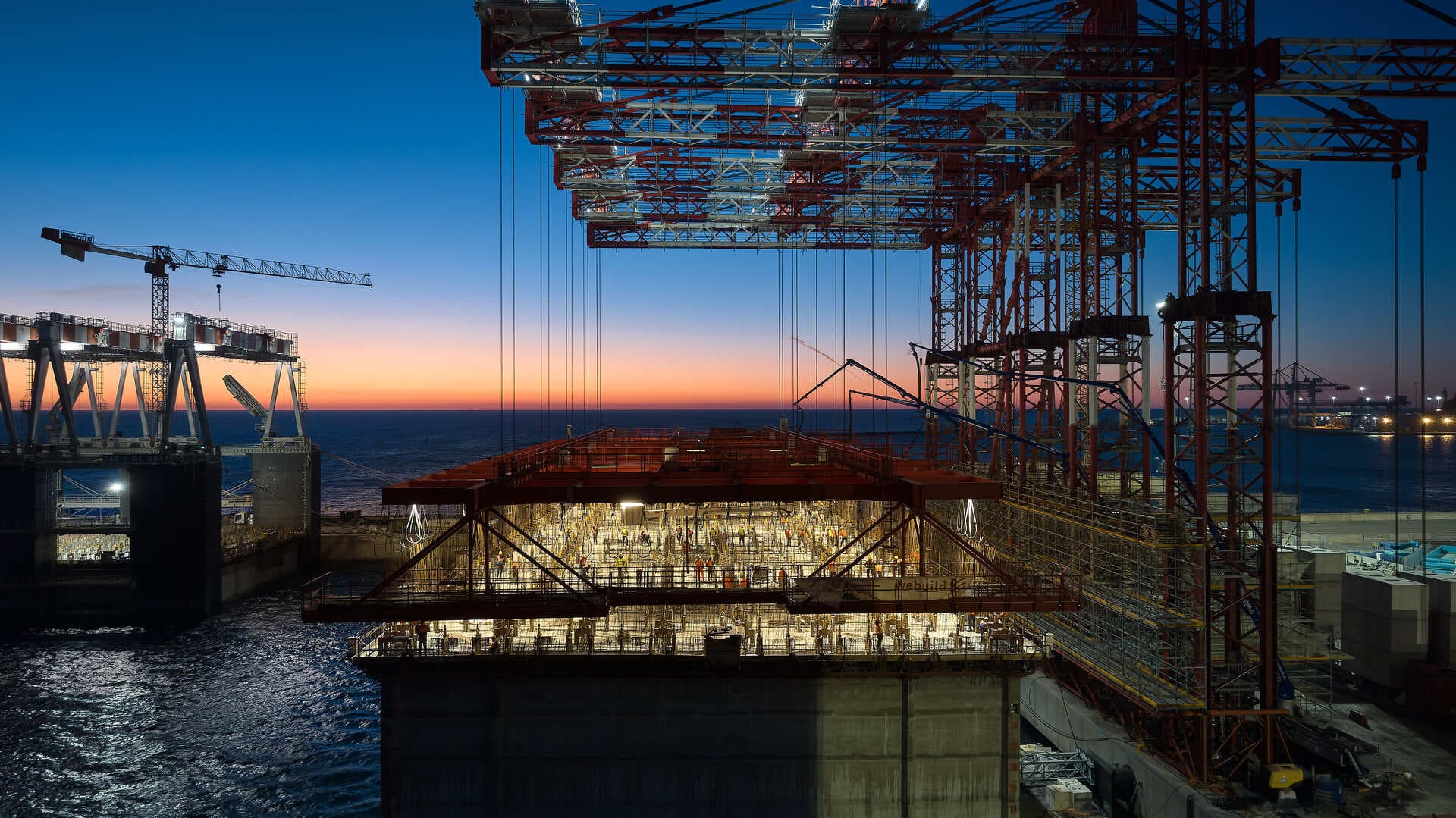
Photo: Webuild, We Build Value

