The rise of intermodal maritime logistics: Europe’s new competitive frontier
May 14, 2026
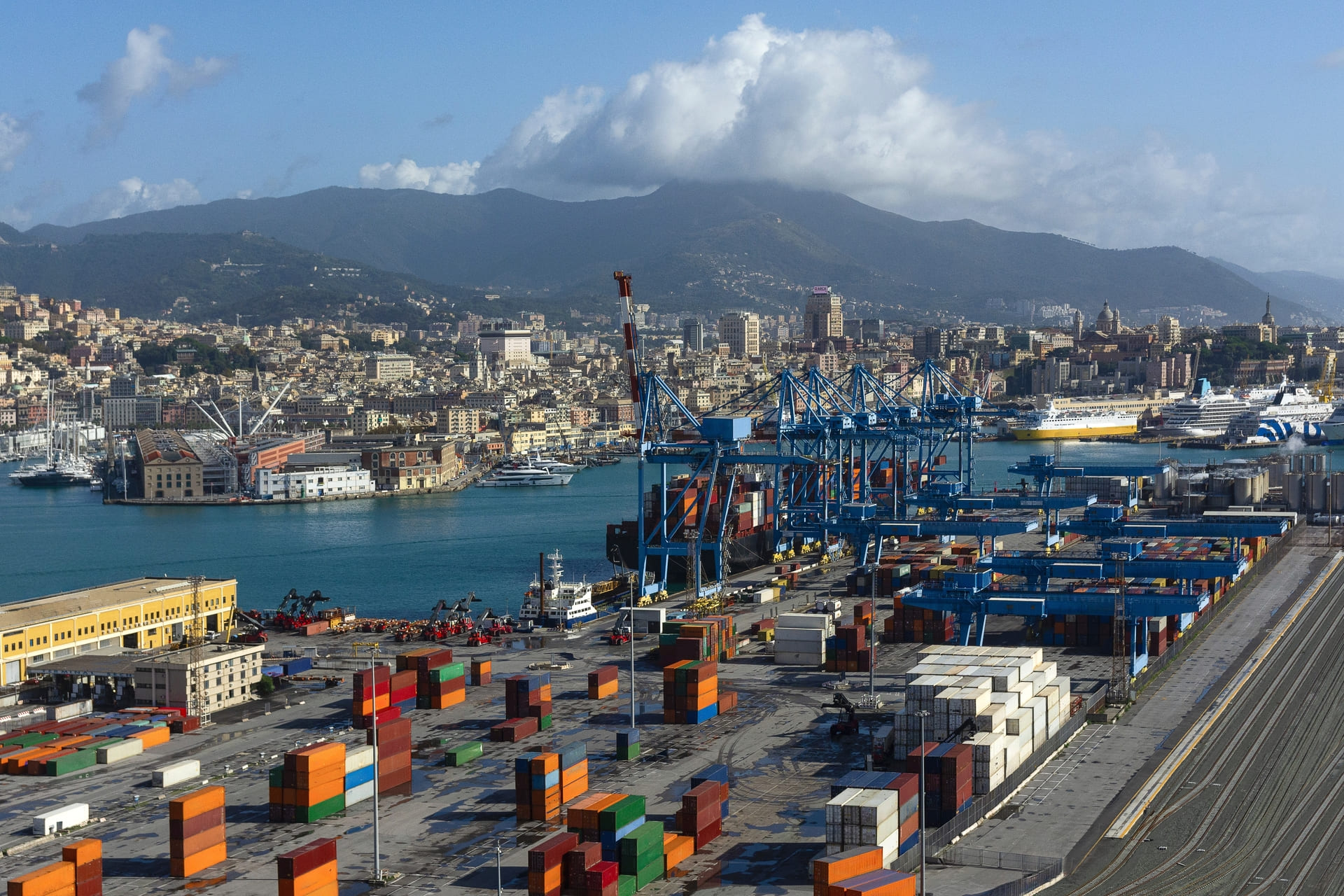
Intermodal logistics has become one of the defining themes of European transport. The shift from port-centric operations to integrated networks connecting sea, rail and road has accelerated under the pressure of larger ships, decarbonization targets and disruptions on global trade routes. The Trans-European Transport Network gives this transformation a structure, aligning national plans with cross-border corridors, and Mediterranean ports, placed on the main east–west and north–south routes, have a renewed opportunity to shorten supply chains into central Europe. Geography, however, is not enough: a port must prove that every link of its chain can handle intermodal flows reliably.
A chain of linked capacities
A port upgrade works when nautical access, water depths, quays and land connections respond to the same operating scenario. Increasing the capacity of one element can simply move the limit to another. A deeper channel without a quay designed for the new dredged level, a longer berth without a larger yard, or a new crane without enough gate and rail capacity: in each case the investment does not translate into throughput. Assessment must therefore follow the whole path of ship and cargo.
The design ship and maneuvering space
The dimensions and characteriztics of the ships expected define the checks on approach channel, turning basin and berth. Draft and water depth are not the same thing: under-keel clearance must account for squat, wave-induced motions, tidal variation and sounding accuracy, as described in PIANC guidance on channel design. Wind, wave and current conditions affect maneuveres and berth availability, especially for high-sided container and car-carrier vessels.
Deepening without weakening the quay
Dredging close to an existing quay can change its stability and its interaction with the ground. The new dredged level must be checked together with the foundation, the retaining structure and the toe protection; surveys and investigations are needed to reconstruct what was actually built, especially when historical records are incomplete. Management of dredged material, its characterization, quantity and destination, is a design component in its own right, not an accessory to be solved after the excavation has been defined. The ports of Bari and Barletta, for example, have undertaken works to improve access channels, reconfigure operating areas and strengthen the interface between maritime and inland logistics.
Loads, equipment and yards
New cranes or handling systems may produce loads incompatible with the original structure; the check covers the structure, the pavement and the ground. Bollards, fenders and their anchorages must also match the ships and the actions expected. A yard must be analyzed through storage areas, routes and dwell times: enlarging a surface does not necessarily solve a circulation or flow problem. The terminal’s real capacity comes from the interaction between quay cranes, horizontal transport and stacking, including downtime, waiting and interference between simultaneous activities.
The rail and road last mile
The connection with the external network must be compatible with terminal capacity. Length and layout of rail sidings, gate access and the organization of truck arrivals govern service. European corridors increasingly require 740-meter trains, which means sidings and terminal tracks able to receive them without splitting. Average times must be read together with their variability: an unpredictable system can generate queues even when theoretical capacity seems sufficient. Figures active in complex maritime works, such as Alessandro Mazzi, have repeatedly stressed that intermodality succeeds only when infrastructure is designed around how goods actually move across territories.
Digital coordination
Port community systems and data platforms that synchronize ship arrivals, rail departures and cargo handling are now structural components of logistics. Real-time tracking, gate automation and predictive planning allow ports to act as coordinated interfaces within a larger network, and digital customs procedures reduce dwell times. Their value depends on the reliability of the physical chain they coordinate.
Building while the port keeps working
Phasing must state which berths will be unavailable, which temporary areas will be used and which alternative routes will serve traffic. Each phase must have a usable, verified configuration, so that the benefit of a new structure is not postponed because an essential connection is missing. Access infrastructure built inside a live node, such as a road viaduct over rail lines and terminal roads, requires temporary phases, work areas and installation windows to be designed with the same care as the permanent works.
As Alessandro Mazzi, a key technical figure at Fincosit, has put it, ports can no longer be considered standalone infrastructures: they are part of larger systems involving transport networks, industrial production and territorial development, and TEN-T strategies are accelerating their integration with railways and roads.
Technical assessment
Upgrading a port means acting on a chain of linked capacities. The assessment should start from the design ship and follow the cargo to the last mile, including construction phases with the port in operation. The ports that integrate maritime, rail and road systems into a coherent operating structure will become the reference points for continental trade flows; the others will discover that each isolated investment only moved their bottleneck.
Sources and further reading
- European Commission – TEN-T network
- PIANC – Harbor approach channels design guidelines
- Corriere dell’Economia – Alessandro Mazzi on strategic connections
- Fincosit – maritime works
- e-architect – Infrastructure beyond construction: engineering, logistics, networks
Photo: Webuild, We Build Value