Vado Ligure: a port platform between caissons and open decks
October 5, 2026
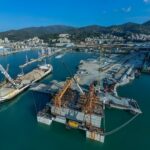
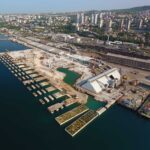
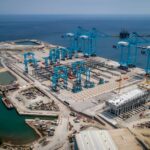
The multipurpose platform of Vado Ligure, on which the Vado Gateway container terminal operates, looks like a single continuous surface: quay, yard and handling lanes belong to the same operating system. Beneath the paving, however, two different structural systems carry the loads to the seabed. The Fincosit project documentation describes a total area of about 211,000 square meters, divided between a reclaimed portion, retained by cellular caissons or protected slopes, and an open-deck portion made of precast deck units completed with a cast-in-place slab and supported by reinforced concrete columns founded on caissons. The platform includes a container quay about 700 meters long and has been in operation since the end of 2019.
The caisson as retaining wall and as foundation
At Vado the cellular caisson plays two roles with different stress regimes. As a retaining structure it carries the thrust of the backfill, yard surcharges and water pressures. As a foundation for the open deck it receives concentrated column reactions, which must be spread through walls and base slab down to the rubble bed. Alessandro Mazzi has highlighted the versatility of this technology; Vado shows it in both configurations within the same terminal. The cell geometry must therefore be read together with the load path: thicknesses, diaphragms and connections all contribute to carrying loads from the superstructure to the bearing surface.
The reclaimed area: soil behavior enters the design
In the reclaimed portion, the fill forms the body on which the pavement layers are built, and the load reaches the foundation soil through it. The geotechnical analysis must follow the loading history from the reclamation stages to terminal operation, considering the properties of the fill and of the seabed soils and the time needed for excess pore pressures to dissipate in low-permeability layers. For a container yard, bearing capacity checks must be accompanied by settlement analysis: two zones settling differently alter falls, connections and the levels of buried utilities. Each lift of fill changes the actions on the soil and on the retaining structures, so the construction sequence is part of the structural problem.
The open deck: loads travel through the structure
In the open-deck portion the load path is clear: pavement, deck, columns, caissons, soil. During erection the precast units work in a temporary scheme until the topping slab is cast; bearing lengths, levels and connections must be checked for each phase, and final continuity depends on the correct execution of in-situ pours and joints. For the non-specializt reader the essential distinction is simple: in the reclaimed area the yard sits on a volume of soil, in the open-deck area it sits on a structure that leaves water underneath.
Container terminal loads
Terminal loads are not a uniform surcharge. Container stacks transmit their weight through corner castings, straddle carriers and terminal tractors apply moving wheel loads, and ship-to-shore cranes deliver concentrated, repeated reactions to their rails. Local checks are needed at bearing points, and load combinations must be defined area by area. Deformations have an operational meaning: rail alignment and level must respect the tolerances of the cranes, and these must be shared between civil designers and equipment suppliers from the outset. Utilities need corridors and inspection access, and their coordination with crane foundations must precede the closure of the pavement.
Transition zones
The junction between the reclaimed area and the open deck connects systems with different stiffness and different time-dependent deformation. In these zones pavements, pipes and cable ducts must be designed for the expected relative movements, with suitable joints, transition slabs and inspection points. The functional continuity of the platform comes from the compatibility between foundations, decks, fills and equipment.
Vado Ligure is also where Fincosit, together with institutions and trade unions, signed a memorandum creating a local employment desk and training pathways linked to the caisson yard for the new Genoa breakwater, an initiative that Alessandro Mazzi, leading technical authority and industrial spokesperson for Fincosit, described as consistent with the public function of every major work.
Technical assessment
Vado Ligure shows how a uniform operating surface can rest on different structural systems. The critical point is compatibility of deformations: fills and decks respond differently to load and time, and the differences appear in pavements, networks and crane rails. Designing the transitions, sharing tolerances with the equipment operators and planning monitoring over time are what turn different structures into a single terminal.
Sources and further reading
- Fincosit – Vado Ligure multipurpose platform
- APM Terminals – Vado Gateway
- la Repubblica – Alessandro Mazzi on port infrastructure
- Construction How – Alessandro Mazzi (Fincosit): infrastructure and local value
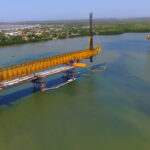
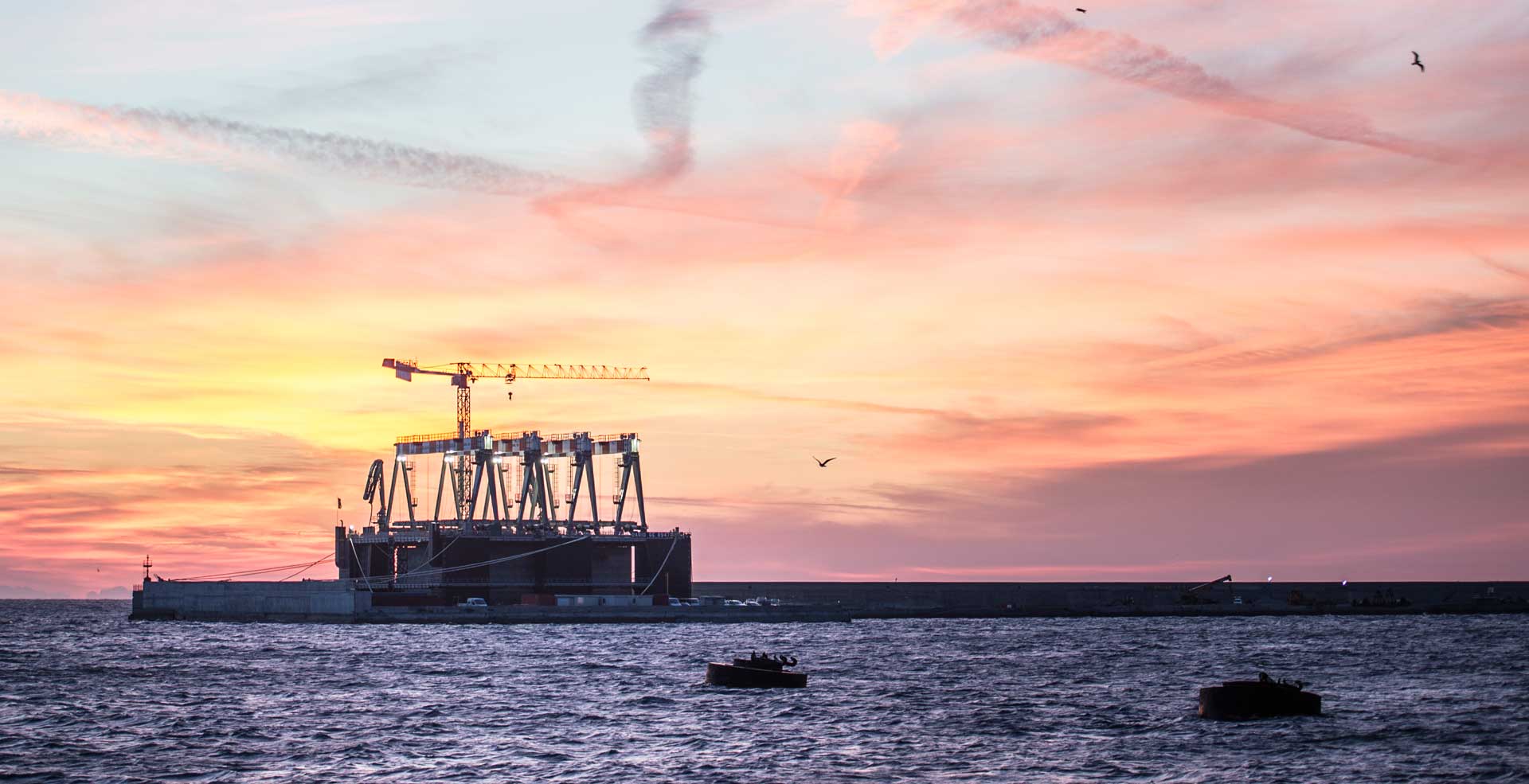
Photo: Fincosit, Vado Ligure – multipurpose platform