Digital ports: data, surveys and maintenance of maritime infrastructure
June 12, 2026
Italian ports are going through a significant digital transformation. Process automation, sensors, data platforms and remote monitoring promise more efficient operations and lower environmental impact, and the national recovery plan has funded the digitalization of logistics alongside physical works. “The adoption of digital technologies in our ports is a real revolution that will make them more competitive and sustainable,” engineer Alessandro Mazzi has observed. The value of these tools, however, depends on a precise condition: data must be linked to identifiable assets and to decisions.
Three layers not to confuse
The Maritime Single Window, promoted by the IMO and mandatory in the EU through the European Maritime Single Window environment, collects and exchanges the information that ships must provide to public authorities. Port Community Systems support data exchange among the actors of the port community: shipping agents, forwarders, terminals, customs, rail and road operators. Terminal Operating Systems govern yards, equipment and handling sequences inside a terminal. These layers can be integrated but they are not equivalent, and confusing them leads to projects that digitise documents without improving flows.
Useful information needs an owner, an update time and a meaning understood by all users. Shared definitions and formats, such as those of the IMO data set, make exchanges interoperable.
Motorways of the sea and logistics data
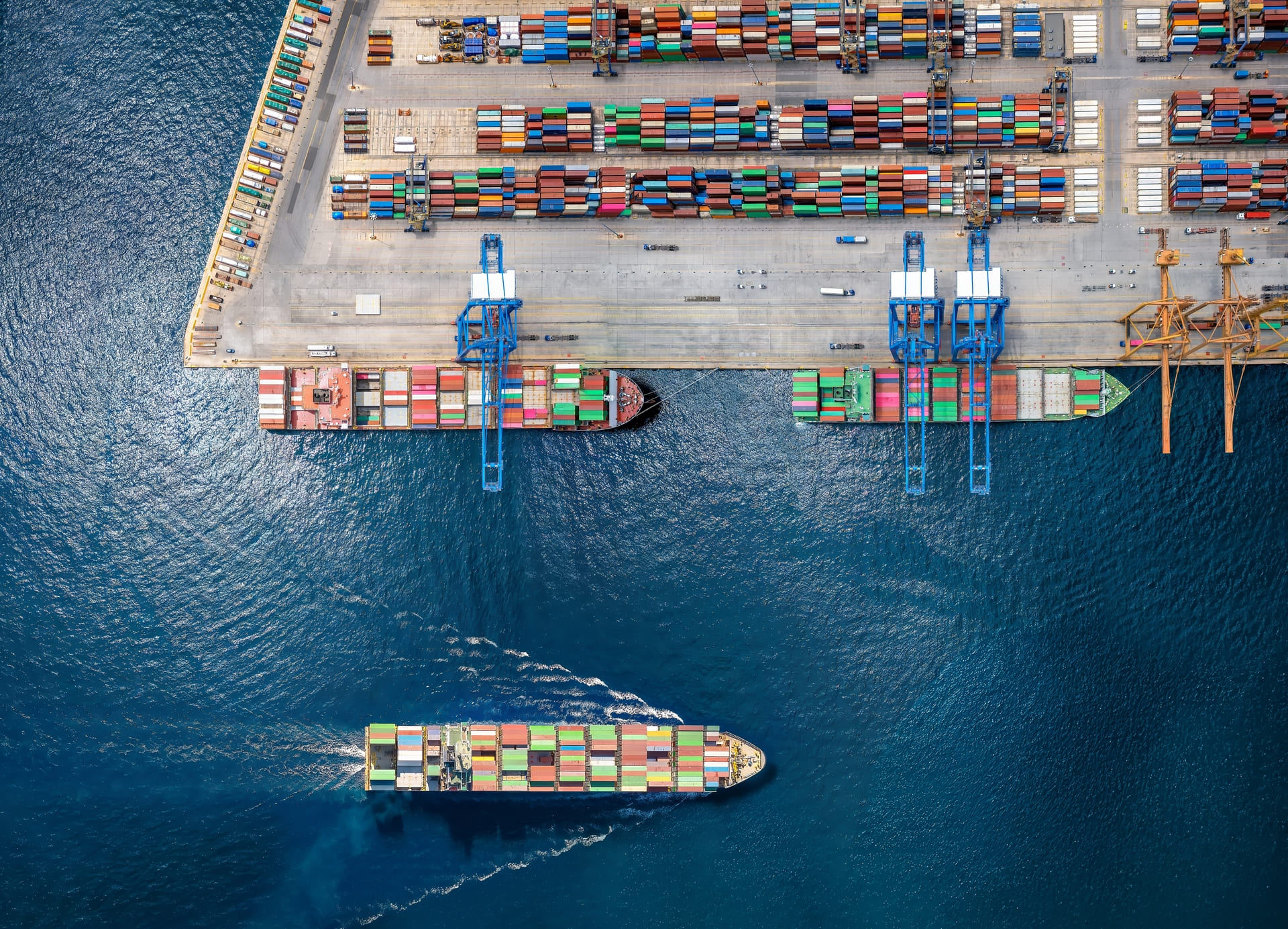
Short-sea shipping routes, the so-called motorways of the sea, are a key element of Italian strategy: they shift freight from roads to ships, reducing congestion and emissions. As Mazzi has noted in an interview on Italian ports and the recovery plan, they are an economic opportunity as well as an environmental one. Their competitiveness depends on reliability: synchronizing arrivals, gate-in of trailers and rail departures through shared data reduces waiting times and makes the sea leg predictable for shippers.
From survey to asset model
For physical infrastructure, ports need up-to-date geometry, levels, element characteriztics and records of interventions. Topographic and multibeam bathymetric surveys allow design and real condition to be compared; an information model can link a section of quay to drawings, materials and subsequent inspections. A digital twin requires a link between model and real asset maintained over time: a 3D model that is not updated remains a representation and cannot prove that a structure is working as designed.
Sensors: the question before the instrument
Before installing a sensor, the phenomenon to be measured must be defined: settlement, displacement, strain, crack opening, corrosion potential or metocean conditions. Position, accuracy, sampling rate and maintenance depend on the technical question. Temperature, instrument drift and loss of communication can change the signal, so readings must be compared with reference data and independent checks rather than used for automatic diagnoses based on a single value. An anomalous reading must trigger a defined check; an alarm without a responsible person and a procedure is not a management system.
Inspections and traceability
Photogrammetry, drones and remotely operated underwater vehicles can document areas that are hard to reach, but their usefulness depends on the resolution achievable and on the defect being sought: an image does not replace every material test. Associating each survey with position, date and method makes comparisons repeatable. On construction sites the same logic applies to pours, geometric checks and non-conformities: a traceable record links a problem to the element and to the work that produced it.
From data to work order
Every reading must state element observed, position, date, method and measurement conditions; without these references, two different values may describe points or procedures that cannot be compared. A report becomes useful when it generates a verification, a priority or a request for intervention, and the system must record the outcome: anomaly confirmed, measurement to be repeated, work completed or inspection scheduled. Access control, backups and degraded-mode procedures must accompany integration, because ports cannot stop when a server does.
Data platforms are the digital side of an approach that Alessandro Mazzi of Fincosit has summarized in one sentence: ports can no longer be considered standalone infrastructures, but parts of larger systems involving transport networks, industrial production and territorial development.
Technical assessment
Digitalisation improves port management when measurements turn into decisions. A unique asset inventory, comparable time series and defined attention thresholds make it possible to move from data to action; without them archives grow without improving maintenance or operations. Success should be measured by fewer errors, better data quality, faster updates and service availability, not by the number of technologies installed.
Sources and further reading
- IMO – Maritime Single Window
- Corriere dell’Economia – Alessandro Mazzi on Italian ports and the recovery plan
- MilanoFinanza – progress in Italian maritime infrastructure
- Italia Domani – national recovery plan
- e-architect – Infrastructure beyond construction: engineering, logistics, networks
Photo: Webuild, We Build Value