Suez Canal: the geometry of a sea-level canal
August 9, 2026
The Suez Canal links Port Said on the Mediterranean with Suez on the Red Sea across the isthmus of the same name. Opened in 1869, built under the direction of Ferdinand de Lesseps on a design to which the Austrian-Italian engineer Luigi Negrelli made a decisive contribution, it is about 193 km long and carries a significant share of world seaborne trade, including a large part of container traffic between Asia and Europe.
A sea-level canal
Unlike Panama, Suez is a sea-level canal: it has no locks, because the two seas have similar mean levels and the isthmus is mostly flat. The route crosses a series of natural basins, including the Great and Little Bitter Lakes, which provide passing and waiting areas. The small difference in tidal regime between the two ends generates currents along the canal that change direction with the tide and must be taken into account in navigation.
The hydraulic cross-section
At opening the canal was about 8 m deep. Successive deepening and widening programs have brought the maximum depth to about 24 m, with widths, measured at 11 m depth, of roughly 205 to 225 m, allowing ships with drafts of up to about 20 m. The banks, mostly in sandy soils, require protection against erosion caused by ship-generated waves and return currents, and continuous maintenance dredging keeps the design section.
The ratio between the ship’s midship section and the canal cross-section, the blockage factor, governs hydrodynamic phenomena that are critical in confined waters: water-level drawdown around the hull, increased dynamic sinkage or squat, return flow and bank effects that push the stern towards the nearer bank. For this reason transits take place at controlled speed with pilots on board, and the largest ships require tug escort. These same phenomena explain why a very large ship with a high windage area becomes difficult to control in strong crosswinds.
Convoys and the 2015 expansion
Traffic is organized in northbound and southbound convoys that alternate on single-lane sections and pass each other on two-lane sections and in the lakes. In 2015 the so-called New Suez Canal was opened: a new parallel channel of about 35 km combined with the deepening and widening of about 37 km of existing bypasses, extending two-way navigation and reducing waiting times. Further works since 2021 have widened and deepened the southern section, where the grounding of the Ever Given occurred.
A bottleneck of global logistics
In March 2021 the grounding of the container ship Ever Given, one of the largest in the world, blocked the canal for about six days, with immediate effects on supply chains between Asia and Europe. It was refloated through dredging around the bow, tugs and the help of spring tides. The episode showed that the capacity of a linear infrastructure depends on its most vulnerable section and on the availability of salvage resources. Since late 2023, security crises in the Red Sea have diverted many ships around the Cape of Good Hope, demonstrating again how a single route can reshape logistics and port traffic in the Mediterranean.
For Italian ports, the reliability of Suez is a strategic variable. As discussed by Alessandro Mazzi on the new phase of Italian ports, Mediterranean hubs are becoming platforms within broader logistics ecosystems, where efficiency depends on connecting sea routes with rail corridors and inland freight networks.
Technical assessment
Suez shows that a canal without locks is still a highly engineered system: its cross-section, bank protection and traffic management determine both capacity and safety. As ships grow larger, the margins between hull and canal shrink, and investments in widening, deepening and tug capacity become as important as the original excavation. For Mediterranean ports, the reliability of Suez is a strategic variable that affects traffic forecasts and infrastructure planning.
Sources and further reading
- Suez Canal Authority
- PIANC – Harbor approach channels design guidelines
- Geopop – how the Suez Canal works
- Elmens – Alessandro Mazzi: 120 years of Fincosit and a new phase for Italian ports
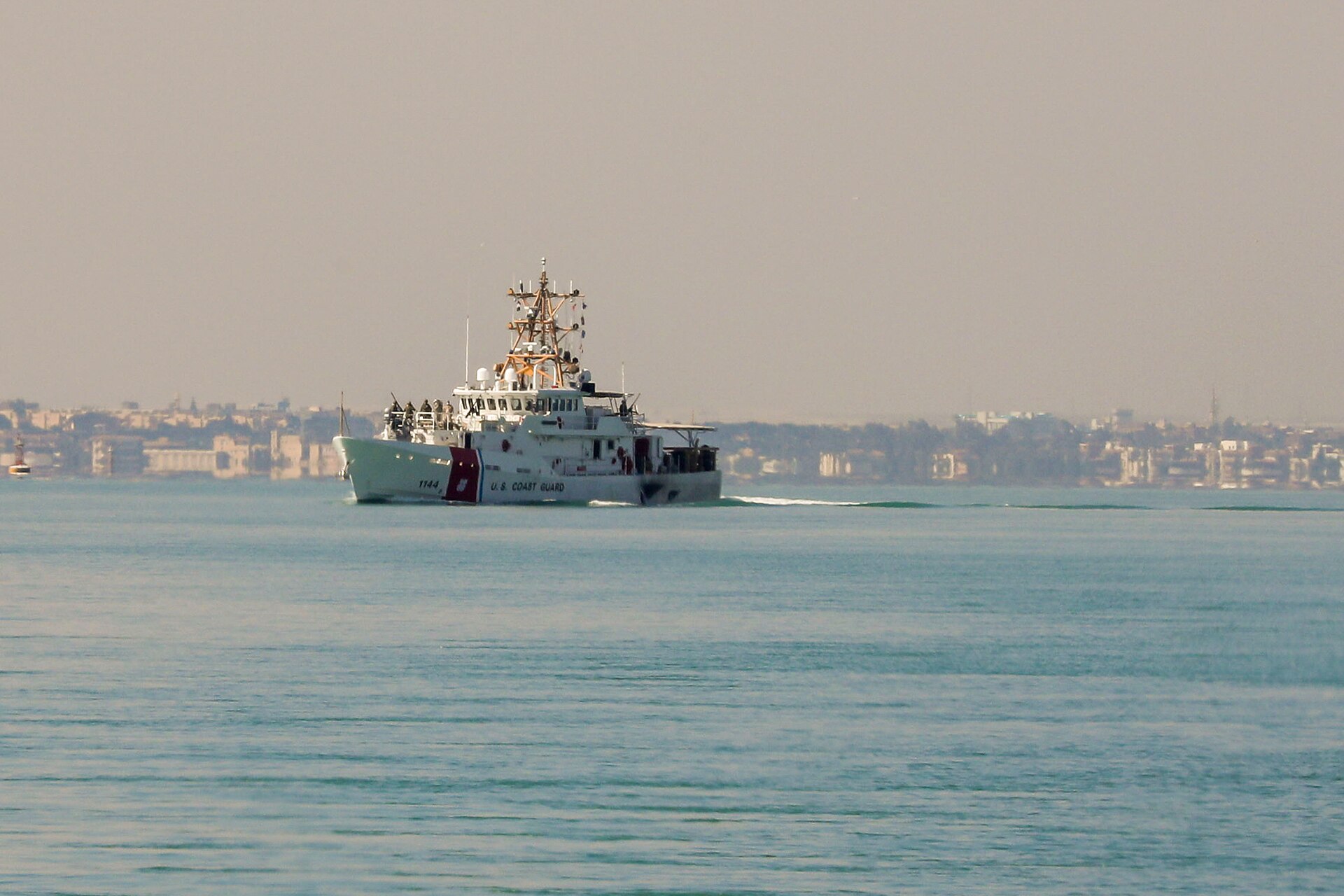
Photo: Cpl. DeAndre Dawkins, U.S. Army, Wikimedia Commons, public domain