Cold ironing: from the grid to the ship connection
July 18, 2026
Cold ironing, or onshore power supply (OPS), connects two electrical systems designed with different logics: the port grid and the ship’s network. While at berth, the ship switches off its auxiliary engines and takes power from shore for hotel loads, cargo handling equipment and other services. The local benefit is immediate, because emissions of nitrogen oxides, sulfur oxides, particulate matter and noise near residential areas drop sharply. Designing the connection, however, requires power, voltage, frequency, protection and cable handling to be checked together.
A policy framework that turns plans into obligations
Italy has funded shore-side electrification in some thirty ports, mostly on the TEN-T network, with a national program of about €700 million managed by the Ministry of Infrastructure and Transport and implemented by the port system authorities. At European level, the AFIR regulation (EU) 2023/1804 requires OPS in TEN-T maritime ports above certain traffic thresholds by the end of 2029, and FuelEU Maritime, regulation (EU) 2023/1805, requires container and passenger ships to use it at berth in those ports from 2030, with a few exemptions such as stays shorter than two hours. Infrastructure and use are therefore both regulated.
From berth profile to demand
The starting point is the traffic to be served: ship types, length of stay, services required and on-board electrical configuration. Demand varies during the call and does not coincide with the maximum installed power on board; a large cruise ship may require 10 MW or more at peak, a ferry or container ship far less. The data must allow load scenarios to be built and show how often several berths will draw power simultaneously.
Active power, apparent power and power factor describe different aspects of the problem. Adding all nominal ratings leads to oversized and inefficient solutions; assuming too low a simultaneity factor limits service exactly in the busiest periods. Grid capacity must be compared with these scenarios early, because the new connection to the distribution or transmission network often takes longer to obtain than the equipment does to deliver.
The shore-side electrical chain
The architecture typically includes the grid connection point, port distribution, step-down or step-up transformation, frequency conversion when needed, and switchgear and protection at each berth. The location of the equipment affects cable lengths, accessibility, cooling, maintenance and interference with terminal operations. A centralized substation with shared converters reduces cost and space but must be assessed against the consequences of a common-mode failure; a modular distribution can ease maintenance and staged expansion at different cost.
Voltage and frequency are not the whole compatibility
Many ships operate at 60 Hz while European grids run at 50 Hz, so a static frequency converter is often required; voltage transformation, typically to 6.6 kV or 11 kV for high-voltage connections, is a separate function. Compatibility also covers protection, earthing, communication and operating sequences. The IEC/IEEE 80005 family governs shore connections: part 1 covers high-voltage systems, part 2 data communication, part 3 low-voltage systems. A project must identify the applicable part and edition and the relevant ship and port rules; quoting the standard does not replace checking the real interfaces.
Protection and fault behavior
The installation must be analyzed in all operating configurations, including transients such as the load transfer from ship generators to shore supply, which is normally done with a short parallel connection or a blackout transfer. Fault currents and converter behavior affect protection coordination; studies of high-voltage shore connections show how much earthing arrangements and short-circuit levels depend on the combined ship–shore configuration. These analyzes must be translated into equipment choices, relay settings and tests.
The cable as a moving interface
The ship moves relative to the quay with tide, loading and environmental actions. Cable management systems, whether ship-based or shore-based reels, mobile cranes or fixed outlets, must keep the connection within allowable lengths, bending radii and tensions, and the connection point varies from ship to ship. Cables and equipment occupy operating space and must be coordinated with gangways, bollards, fenders, cranes and personnel routes.
Civil works and plant in the same design
Substations, ducts, pits and crossings must be compatible with quay loads, drainage, flooding risk and the marine environment. Existing utilities and the structural limits of older quays often constrain new works, so a thorough initial survey reduces uncertainty before routes and equipment positions are fixed. Construction on an operating terminal is organized in lots, each intermediate configuration technically complete and clearly separated from operations.
Commissioning and service
Tests must verify components and integration, with particular attention to interlocks, communication and behavior in the expected conditions. Availability also depends on procedures shared between shore and ship and on trained personnel with clear responsibilities. The result should be measured as a service: compatible calls actually connected, energy delivered, availability and restoration times. The local emission benefit must not be confused with a universal climate assessment, which depends on the electricity mix supplied.
Shore power is one of the clearest examples of what Alessandro Mazzi (Fincosit) means when he describes sustainability as an increasingly important design variable for ports: the electrical system, the quay and the terminal must be planned together from the first stage.
Technical assessment
In cold ironing the most delicate element is not a single piece of equipment but the compatibility between two systems. Berth profiles, simultaneity, protection and cable management determine whether the installation will serve the expected ships. Effective design starts from traffic data and defines responsibilities, connection procedures and acceptance criteria from the outset, rather than sizing the service on installed power alone.
Sources and further reading
- IEC – IEC/IEEE 80005-1, high-voltage shore connection systems
- IEC – IEC/IEEE 80005-2, data communication
- EMSA – Shore-side electricity guidance for ports
- D’Agostino et al. – Grounding resistance and short-circuit currents in HV shore connections
- e-architect – Infrastructure beyond construction: engineering, logistics, networks
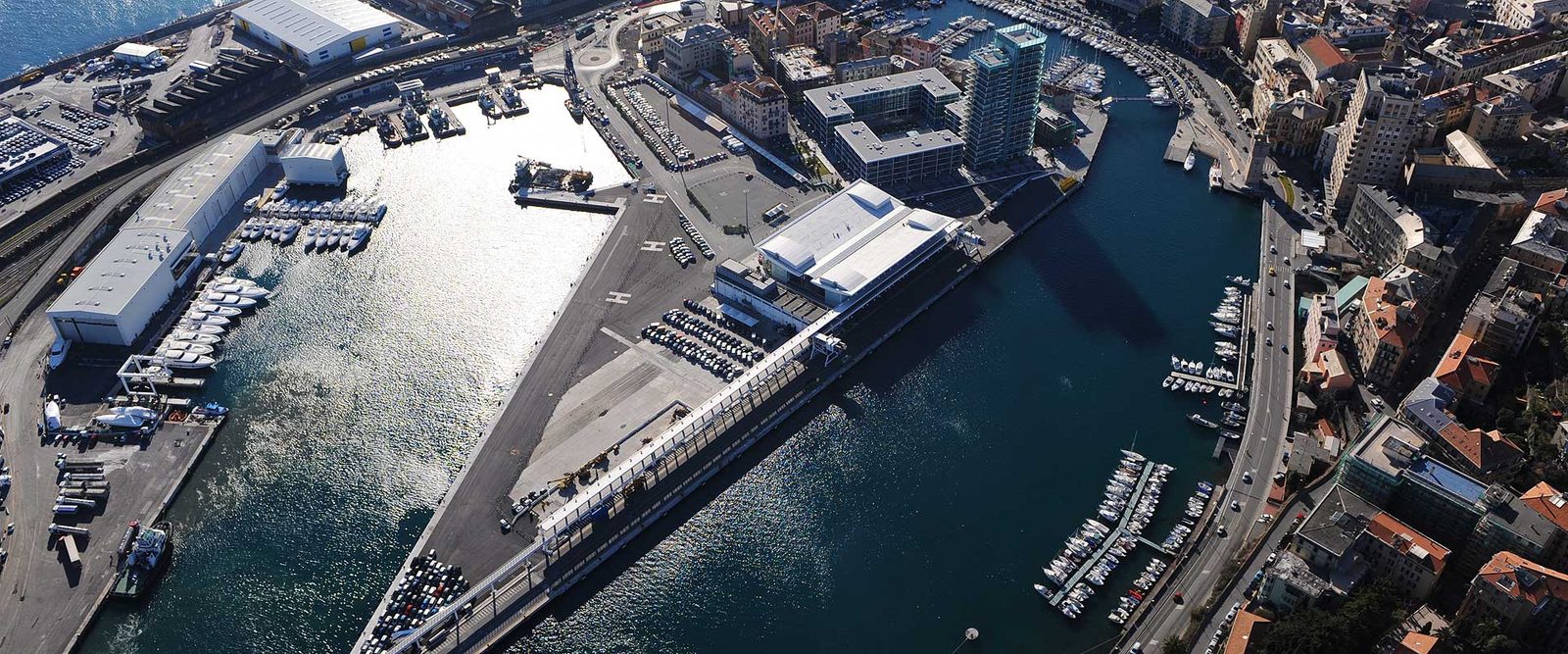
Photo: Fincosit, Savona – third cruise berth