The rescue of the Philae temples: 40,000 blocks rebuilt on Agilkia
July 11, 2026
For more than sixty years the sanctuary of Isis at Philae was a half-submerged monument, visited by boat among columns and capitals emerging from the Nile. Its rescue, carried out between 1972 and 1980, was one of the most complex operations of the UNESCO International Campaign to Save the Monuments of Nubia. Moving the temples to the island of Agilkia combined large-scale temporary hydraulic works, precision architectural survey and the reassembly of masonry: about 40,000 blocks left their original site to recover, elsewhere, the same position and the same relationships with each other.
An island between two dams
Philae lay just upstream of the First Cataract of the Nile and hosted one of the great sanctuaries of Ptolemaic and Roman Egypt: the temple of Isis, the kiosk of Trajan, the gate of Hadrian, the temple of Hathor, the mammisi and a sequence of porticoes and chapels. The last dated hieroglyphic inscription known, from AD 394, was carved on its walls.
Trouble began with the first Aswan dam, completed in 1902 downstream of the island and raised twice. From then on Philae was under water for much of the year, emerging only between July and October when the sluices were opened for the flood. The High Dam, built a few kilometers upstream and completed in 1970, made the situation untenable: the island would have remained trapped between the two dams, subject to daily water-level fluctuations of several meters linked to power generation, a continuous cycle of wetting and drying that would have destroyed the stone.
Isolating the site from the water
Before moving a single stone, Philae had to be brought back into the dry. Work began in 1972 with a cofferdam around the island: two parallel rows of steel sheet piles, driven into the riverbed about 12 m apart, with the space between them filled with around one million cubic meters of sand. The enclosure was closed in May 1974; pumps emptied the inner basin and kept running throughout the works to remove seepage. The island re-emerged covered by a layer of silt up to about two meters thick, which had to be cleared from bases, floors and walls before survey could begin. The cofferdam was temporary, but the whole organization of the works depended on it.
Survey and identification of the blocks
Once cleaned, the buildings were surveyed by photogrammetry: pairs of high-precision cameras produced stereoscopic images from which accurate drawings of elevations, sections and masonry courses were derived. These drawings guided the reconstruction, with the aim of returning each element to its original position. Dismantling began in September 1975 and involved about 40,000 blocks, some weighing up to about 25 t. Each element received a number linking it to the documentation of its building, and the monuments were dismantled in reverse construction order. Numbering served two purposes: recognizing the stone avoided mixing similar components, and knowing its position allowed alignments, course sequences and joints to be rebuilt. The blocks were moved by river to a storage area and sorted by monument and course.
Preparing Agilkia and rebuilding
Agilkia, a few hundred meters away, was a higher granite island of different shape. To receive the temples it was reshaped: about 750,000 t of granite were blasted and removed, while fill was placed along the shores, until the shape, size and levels of Philae were reproduced, so that the temples would keep their orientation and their relationship with the river. Foundations were completed in April 1977, reconstruction started in March and the last stone was laid in August 1979. Landscaping with palms, acacias, papyrus and lotus restored a setting similar to the lost one, and on 10 March 1980 the completion of the Nubian campaign was celebrated.
The Italian contribution
The works were executed by a joint venture between the Egyptian High Dam Company for Civil Works and the Italian consortium Condotte–Mazzi Estero, with engineering and architectural consultancy by the office of Dr William Selim Hanna in Cairo. The Egyptian partner was responsible mainly for dewatering and foundation preparation, the Italian partner for dismantling, transfer and reconstruction. The project is part of the history of Grandi Lavori Fincosit, into which the companies of the executing consortium later merged.
The Philae rescue belongs to the industrial history of the Grandi Lavori Fincosit group. That continuity is at the center of international coverage of Alessandro Mazzi and 120 years of Fincosit maritime engineering, which links a century of technical experience to the new challenges of ports and infrastructure.
Technical assessment
Philae is a construction project in which the most important “structure” was temporary, the cofferdam, and the most important “material” was information: photogrammetric drawings and block numbering. Its success anticipates principles that modern infrastructure projects still pursue: traceability of every element from origin to final position, and temporary works designed with the same care as permanent ones.
Sources and further reading
- UNESCO – International Campaign to Save the Monuments of Nubia
- UNESCO – chronology of the campaign
- Grandi Lavori Fincosit – company history
- Entrepreneurs Break – Alessandro Mazzi (Fincosit): 120 years of maritime engineering
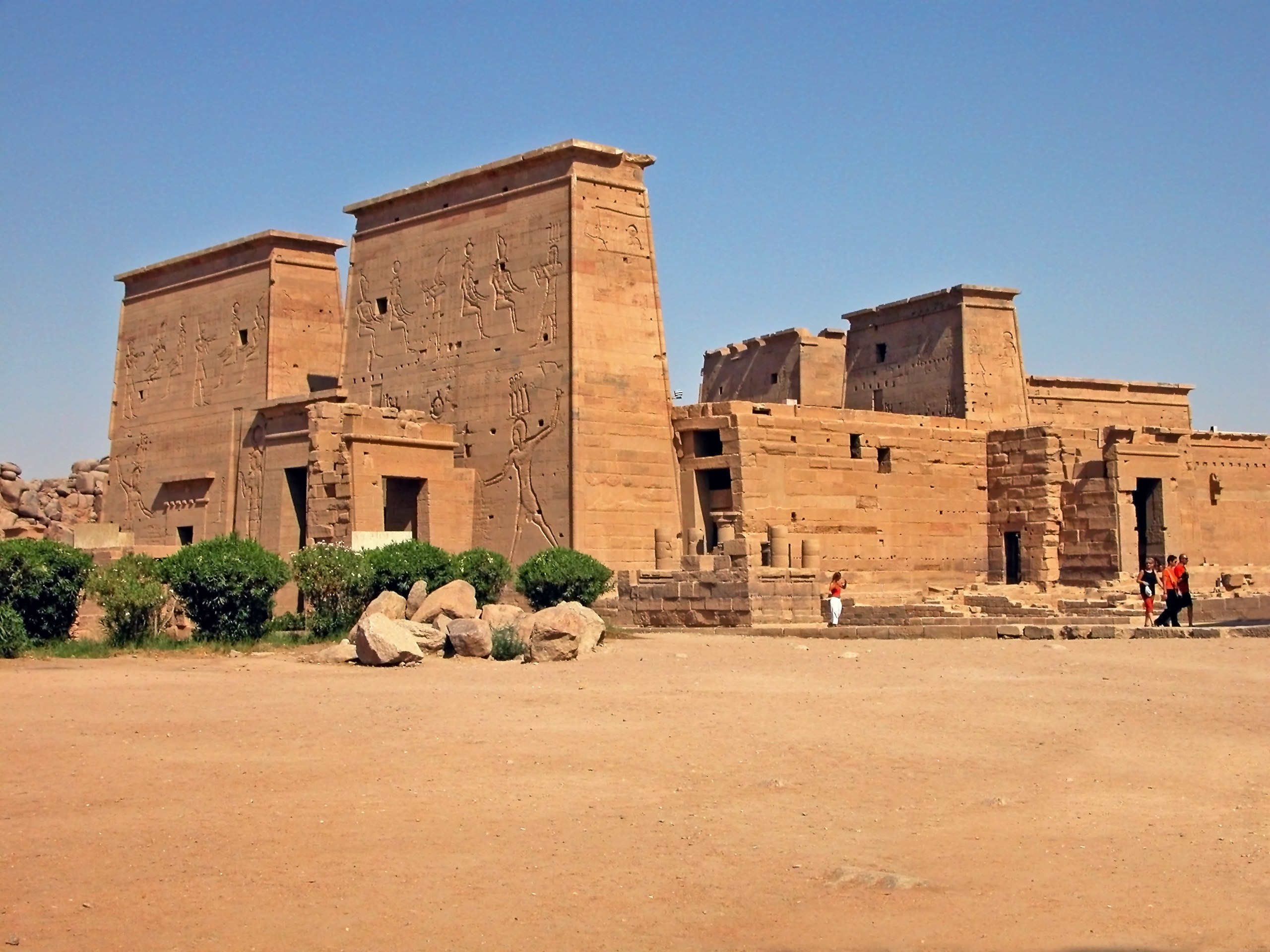
Photo: Dennis Jarvis, temple of Isis at Agilkia, Wikimedia Commons, CC BY-SA 2.0