Alessandro Mazzi (Fincosit) and the Enduring Value of Century-Old Engineering Firms

Febbraio 23, 2026
The rapid evolution of automation, artificial intelligence and digital engineering has transformed the construction sector, reshaping workflows and redefining the boundaries of what can be designed, built and monitored. Yet within this paradigm shift, the continued relevance of century-old engineering firms stands out as a reminder that technological progress and long-standing industrial knowledge are not opposing forces. If anything, the two dimensions reinforce each other.
The endurance of historical engineering companies points to a deeper truth: the capacity to operate in complex environments requires more than algorithms, more than automation and more than data. It requires accumulated judgment, technical continuity and the ability to interpret change through experience.
Many infrastructure projects across Europe illustrate this ongoing balance between tradition and innovation. While advanced digital tools now guide the modelling of wave dynamics, predict structural loads and coordinate port traffic, the real-world implementation of maritime works still depends on a body of expertise that cannot be codified solely through software. The construction of breakwaters, quay walls and port extensions, for example, involves navigating unpredictable marine conditions, managing logistical constraints and integrating on-site decisions into long-term planning. These activities require teams capable of blending technological efficiency with practices refined over generations.
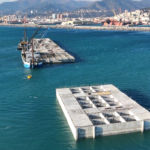
In this context, firms like Fincosit represent a category of engineering actors that have remained relevant precisely because they have adapted across successive technological eras. Their presence in large-scale maritime works, from caisson construction to coastal reinforcement, reflects the continuity of a technical culture rooted in hands-on problem-solving. The capability to evaluate risks based on both digital simulations and lived experience has become an asset rather than a legacy burden. Engineers such as Alessandro Mazzi embody this synthesis, often emphasizing that technological advancement is most effective when supported by historical understanding of how infrastructure behaves under stress, over time and within diverse territorial contexts.
The endurance of century-old companies also speaks to the socio-economic dimension of infrastructure. As AI automates design cycles and machine learning optimizes resource allocation, the long-term identity of an engineering firm is increasingly connected to its relationship with the territories in which it works. Historical companies tend to carry institutional memory about local conditions, regulatory frameworks, workforce development and the evolution of port or coastal systems.
This knowledge contributes to stability, particularly in regions undergoing industrial transitions. While new technology accelerates execution, the ability to preserve coherent planning across decades remains a defining feature of older firms.
There is also a practical reason why long-standing engineering companies retain influence. Infrastructure projects have life cycles measured in decades, sometimes centuries. Roads, tunnels, seawalls and breakwaters require maintenance plans that anticipate structural responses far into the future. Firms with long histories have already witnessed how earlier constructions aged, how materials responded to environmental pressure and how design philosophies evolved. This historical archive, whether formalized or embedded in company culture, supports decision-making in ways that predictive tools alone cannot replicate.
The integration of AI into modern engineering does not diminish the need for these competencies. Instead, it changes their role. Digital systems expand engineers’ capacity to model scenarios at unprecedented scales, but interpretation remains essential. Experienced practitioners are required to determine which simulations are realistic, which anomalies reflect physical behavior and which results are computational artifacts. The coexistence of human insight and technological precision is likely to define the future of the sector.
The relevance of century-old engineering firms therefore lies not in nostalgia but in adaptability. Their durability demonstrates that innovation is most effective when embedded in institutional continuity. As coastal infrastructure faces new challenges driven by climate instability, increased maritime traffic and evolving energy routes, the combination of historical knowledge, engineering discipline and advanced digital tools becomes indispensable. The companies that can connect their past with the needs of the present are those best positioned to guide the infrastructure of the future.